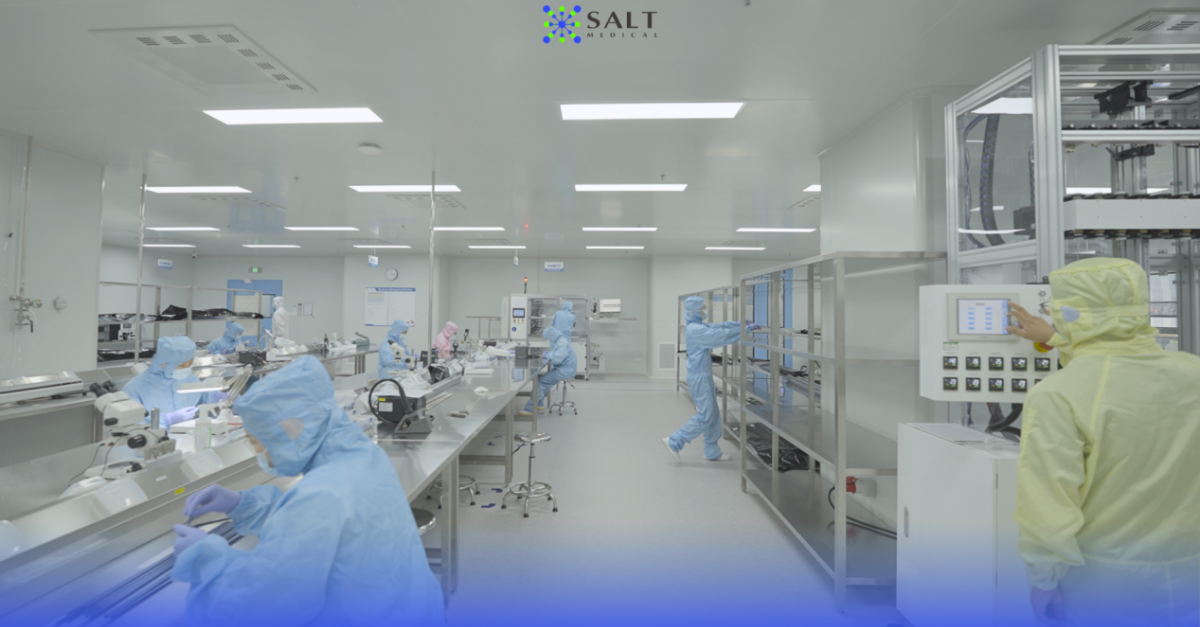

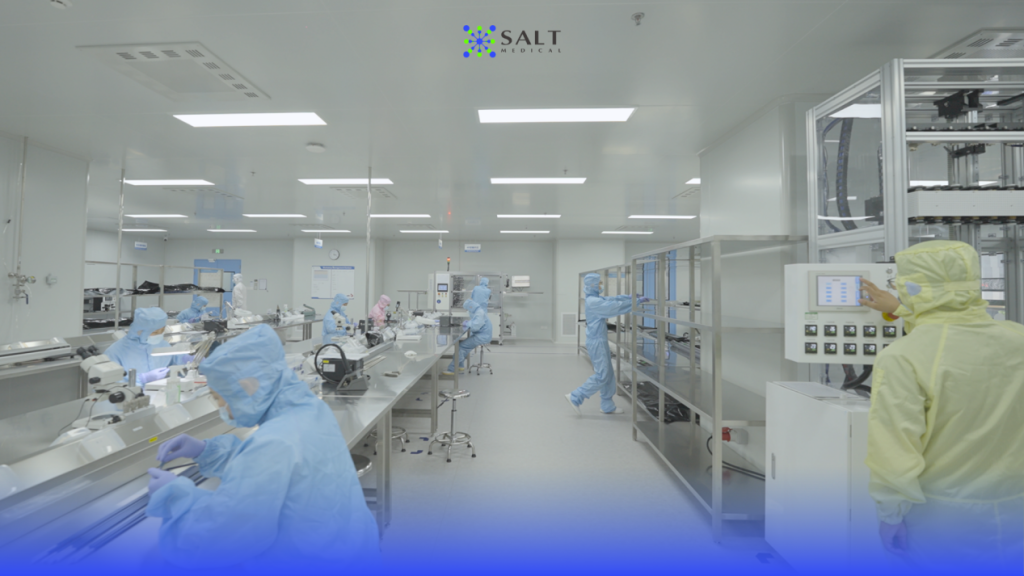
In medical device manufacturing, the production environment is far more than simply a physical space in which products are made. From the introduction of raw materials into production areas to product processing, assembly, and final packaging, personnel, materials, equipment, and the environment itself can all be potential sources of contamination.
For precision medical devices such as catheters and guidewires, particulates, microorganisms, and other contaminants may not be visible to the naked eye, yet they can affect product quality. Cleanroom manufacturing, therefore, is not simply about keeping production areas visibly clean. It requires a systematic approach to environmental control that identifies and manages potential contamination risks throughout the manufacturing process.
Why Are Cleanroom Environments Essential in Medical Device Manufacturing?
Medical devices vary widely in their intended use. Some come into direct contact with the human body, while others may be implanted for extended periods. Their manufacturing processes leave little room for rework or subsequent corrective measures once certain forms of contamination have occurred. If particulate or microbial contamination occurs during production, it may not be possible to eliminate the risk through subsequent processing. This can result in entire batches being rejected and, if affected products reach clinical use, may pose patient safety risks, including infection.
A cleanroom environment that meets product-specific needs and applicable regulatory requirements is therefore a fundamental component of medical device quality management. It also plays an important role in meeting quality management requirements and safeguarding product quality.
What Risks Need to Be Controlled in a Cleanroom Environment?
In day-to-day production management, temperature, humidity, differential pressure, and cleanliness levels are important environmental monitoring parameters. However, effective cleanroom management involves more than monitoring these indicators. It also requires attention to dynamic contamination risks that may arise during actual production activities.
These risks generally fall into four categories:
Environmental risks
Control airborne particles, settle plate microbial counts, and airborne microbial levels. Monitor potential issues such as differential pressure fluctuations caused by door openings, insufficient environmental recovery time, and disrupted airflow patterns.
Personnel-related risks
Manage potential contamination introduced by improper gowning, inadequate disinfection when personnel return to work after leaving their posts, and the transfer of external contaminants into controlled areas.
Material-related risks
Prevent cross-contamination caused by inadequate material disinfection, the mixing of personnel and material flows, and improper handling of production waste.
Equipment-related risks
Address common sources of contamination, including dust and microbial accumulation in equipment gaps, residues following maintenance, and inadequate controls for equipment that has been idle for extended periods.
In essence, effective cleanroom management requires systematic control of potential contamination sources across personnel, materials, equipment, and the environment, supported by ongoing monitoring and process management to ensure that production conditions remain within established requirements.
Salt Medical in Practice: Implementing Cleanroom Controls Throughout the Manufacturing Process
At Salt Medical, we align our practices with the company’s quality management system and applicable Good Manufacturing Practice (GMP) requirements. Our approach integrates personnel, material, equipment, and environmental controls to translate quality requirements into practical measures on the production floor.
Personnel Management: Preventing Contamination at the Source
Standardised procedures, including graded gowning and hand disinfection, are implemented in production areas, with an authorisation-based access control system in place. Work practices are also standardised. When personnel return after a temporary absence or after door-opening activities, the required additional disinfection measures must be completed before work resumes, helping reduce contamination risks associated with personnel movement.
Material Management: Minimising Cross-Contamination Risks
Dedicated routes are established for personnel and material movement wherever required, while staggered operations are arranged in areas where operating conditions or space constraints make this necessary.
Materials entering cleanrooms must undergo the prescribed external packaging cleaning, disinfection, and designated holding or staging procedures. Conforming products, waste, and nonconforming products are stored separately and handled through designated processes to minimise the risk of cross-contamination.
Equipment Management: Maintaining Control Across Production Areas
Equipment cleaning, maintenance, and calibration are carried out in accordance with applicable operating procedures, routine inspection requirements, and maintenance schedules.
Particular attention is paid to areas where dust may accumulate, such as equipment gaps and air ducts. Equipment that has been idle for extended periods, along with backup production areas, is also subject to periodic cleaning, disinfection, and status checks in line with applicable requirements. These measures help maintain appropriate control over equipment and production areas.
Environmental Monitoring: Assessing Both Static Conditions and Actual Production Activities
Environmental monitoring plays an important role in assessing whether cleanroom conditions remain under control.
At Salt Medical, routine monitoring is complemented by monitoring under actual production conditions, with particular attention to higher-risk scenarios such as full-capacity production and frequent door opening for material retrieval.
Monitoring locations are also reviewed and adjusted as appropriate based on production line layouts, process changes, and actual operating conditions. This helps ensure that monitoring results reflect the environment in which production takes place, rather than relying solely on satisfactory readings under limited conditions.
Closing the Loop on Deviations: Timely Response and Continuous Improvement
In practice, maintaining acceptable environmental conditions during routine operations is only part of effective cleanroom management. Equally important is the ability to respond appropriately when abnormalities occur, investigate their causes, and implement corrective actions.
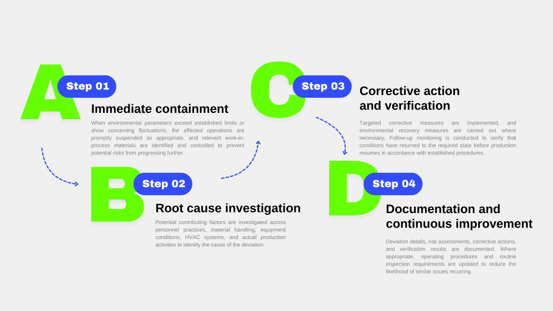
At Salt Medical, environmental deviations are managed through a standardised process designed to support traceability and auditability:
Immediate containment
When environmental parameters exceed established limits or show concerning fluctuations, the affected operations are promptly suspended as appropriate, and relevant work-in-process materials are identified and controlled to prevent potential risks from progressing further.
Root cause investigation
Potential contributing factors are investigated across personnel practices, material handling, equipment conditions, HVAC systems, and actual production activities to identify the cause of the deviation.
Corrective action and verification
Targeted corrective measures are implemented, and environmental recovery measures are carried out where necessary. Follow-up monitoring is conducted to verify that conditions have returned to the required state before production resumes in accordance with established procedures.
Documentation and continuous improvement
Deviation details, risk assessments, corrective actions, and verification results are documented. Where appropriate, operating procedures and routine inspection requirements are updated to reduce the likelihood of similar issues recurring.
A Real-World Case: Strengthening Quality Control Through Early Detection
During routine environmental monitoring, Salt Medical detected an airborne particle count approaching the established control limit in an inner packaging room. Production in the room was immediately suspended, and all semi-finished and unpackaged products associated with the period since the last satisfactory monitoring result were isolated while a deviation investigation was initiated.
The investigation found that large rolls of paper used for medical device packaging had been cut in batches in the inner packaging room the previous afternoon, alongside packaging sealing activities. Fine paper fibers generated during cutting were identified as a potential contributing factor to the fluctuation in airborne particle levels.
Salt Medical implemented the following measures:
1. Environmental recovery:
The room underwent thorough cleaning and disinfection. Production resumed in accordance with established procedures after follow-up particle monitoring met the applicable requirements.
2. Process adjustment:
Batch cutting of packaging paper was relocated to a designated preprocessing area equipped with dust extraction and exhaust ventilation, reducing the source of particulate contamination in the cleanroom.
3. Management improvements:
Relevant SOPs were updated to clarify requirements for dust-generating activities. Checks on such activities and compliance with environmental recovery requirements were incorporated into routine QA inspections, and relevant personnel received refresher training.
At Salt Medical, we are committed to integrating GMP requirements and our internal quality management system into every stage of manufacturing. Through disciplined environmental controls and standardised, traceable processes, we work to safeguard product quality and support consistent manufacturing outcomes for precision medical devices.