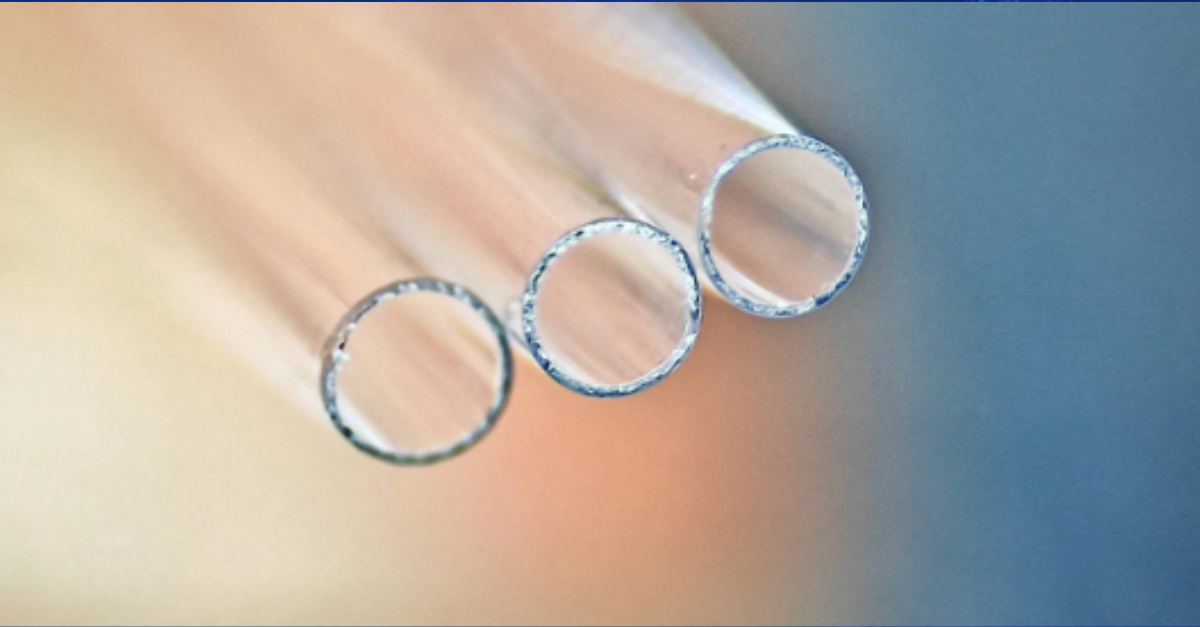

As minimally invasive procedures continue to advance, device manufacturers are pushing the limits of catheter design. One of the most critical enabling technologies is ultra-thin wall extrusion tubing, which allows catheters to become smaller, more flexible, and capable of reaching increasingly complex anatomy.
However, manufacturing ultra-thin wall tubing at production scale is far from straightforward. Maintaining dimensional accuracy, mechanical strength, and process stability requires deep expertise in materials engineering, extrusion technology, and precision process control.
At Salt Medical, we’ve developed an integrated approach that enables reliable production of ultra-thin wall medical tubing while meeting the demanding quality requirements of today’s interventional devices.
Why Ultra-Thin Wall Extrusion Tubing Matters
Ultra-thin wall extrusion tubing plays a vital role in a wide range of minimally invasive medical devices, including:
- Interventional catheters
- Delivery systems
- Neurovascular devices
- Cardiovascular catheters
- Structural heart devices
- Electrophysiology applications
By reducing wall thickness without compromising performance, manufacturers can increase the catheter’s inner lumen while maintaining the same outer diameter or reduce the overall profile without sacrificing functionality. The result is improved trackability, enhanced flexibility, and access to smaller, more distal anatomy.
The Manufacturing Challenges of Ultra-Thin Wall Medical Tubing
Producing tubing with extremely thin walls introduces several technical challenges that directly impact product quality and manufacturing yield.
Maintaining Wall Thickness Uniformity
As wall thickness decreases, even minor process variations can result in uneven material distribution. This affects mechanical performance, dimensional consistency, and downstream assembly.
Preventing Tube Breakage
Ultra-thin wall structures are more susceptible to instability during extrusion, increasing the risk of stretching, deformation, or breakage during manufacturing.
Achieving Consistent Production Quality
Medical device manufacturers require tight tolerances across every production batch. Without precise control of materials, equipment, and processing parameters, maintaining repeatable quality becomes increasingly difficult.
Salt Medical’s Integrated Solution
Rather than relying on a single process improvement, Salt Medical combines material optimisation, custom extrusion equipment, and closed-loop process control to achieve stable production of ultra-thin wall medical tubing.
Advanced Material Engineering
Our material development focuses on enhancing process stability while maintaining the performance required for medical applications.
Key capabilities include:
- Customised polymer formulations designed for medical-grade applications
- Optimised molecular weight distribution for improved processing stability
- Functional material modification while preserving biocompatibility and flexibility
- Enhanced melt stability and mechanical strength to reduce dimensional variation and minimise fracture risk
Precision Extrusion Equipment
High-performance extrusion requires equipment specifically designed for ultra-thin wall applications.
Salt Medical utilises:
- Customised extrusion components
- Closed-loop temperature control systems
- Stepless traction adjustment for precise line speed control
- Real-time process monitoring and closed-loop regulation to ensure production stability
Together, these technologies help deliver tighter tolerances, improved repeatability, and higher manufacturing efficiency.
Customer Success: Precision Tube Manufacturing
For an overseas medical device customer, Salt Medical optimised the manufacturing process for an ultra-thin wall extrusion tube with:
- Outer diameter: greater than 0.8 mm
- Wall thickness: approximately 0.05 mm
Following systematic process optimisation, production achieved:
- Inner and outer diameter tolerance of ±0.05 mm
- Wall thickness tolerance of ±5%
- The optimised process successfully met the customer’s stringent dimensional requirements and enabled stable, high-volume production.

To protect our customer’s intellectual property, all production data and images have been anonymised.
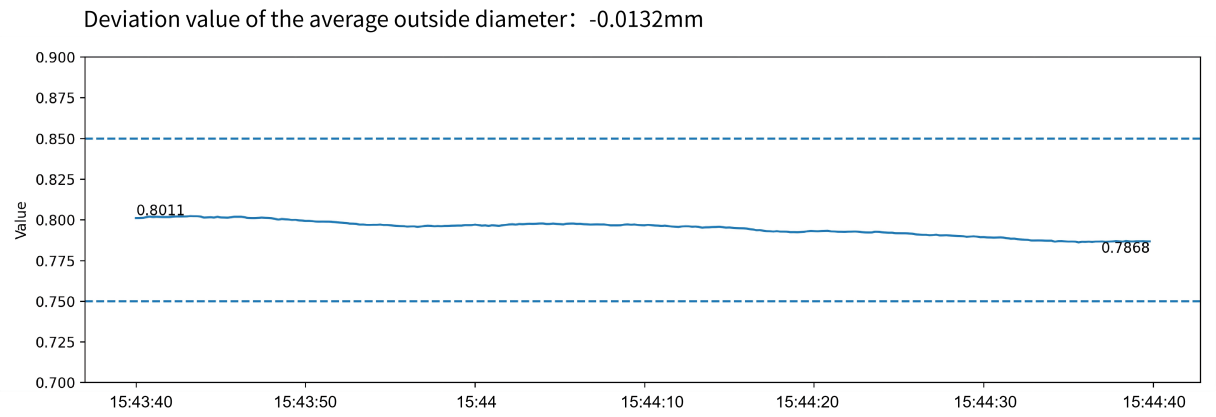
Dimensional Monitoring Data from a Real-World Ultra-Thin Wall Extrusion Tube Production Case
Partner with Salt Medical for Precision Medical Extrusion
As catheter designs become smaller and more sophisticated, manufacturing precision becomes increasingly important. Salt Medical combines advanced materials expertise, precision extrusion technology, and rigorous process control to help medical device companies overcome complex manufacturing challenges.
Whether you’re developing next-generation neurovascular catheters, cardiovascular delivery systems, or other minimally invasive devices, our engineering team can help you accelerate development while ensuring reliable, scalable production.
Looking for a custom medical extrusion solution?
Contact Salt Medical to discuss your project and discover how our precision extrusion capabilities can support your next medical device innovation.
Related Insights in Medical Device Innovation